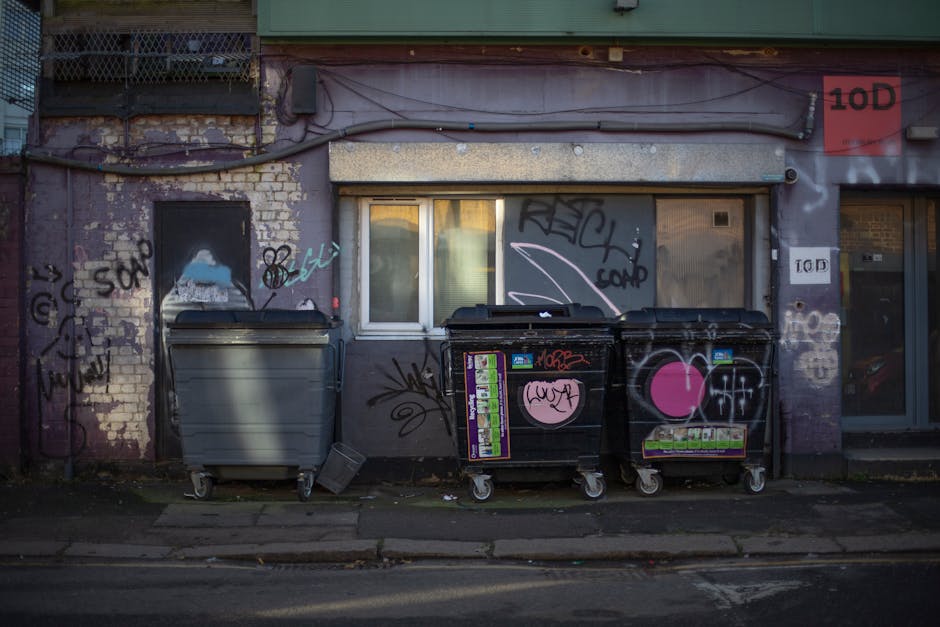
Blocked communal bins on Poplar estates: resolution tips
If you live on a Poplar estate, a blocked communal bin area can turn a normal week into a messy, smelly, slightly annoying problem very quickly. One overflowing bin, a jammed chute, or a pile of bulky waste left beside the enclosure can affect everyone using the block. This guide to Blocked communal bins on Poplar estates: resolution tips walks you through what usually causes the problem, how to fix it safely, and when to bring in extra help before things get out of hand.
Truth be told, communal bin issues rarely stay small for long. A lid won't close, refuse starts blowing around, and before you know it the whole area looks neglected. The good news? Most blockages can be resolved with a calm, methodical approach. Below you will find a practical step-by-step process, a checklist, common mistakes to avoid, and a clear comparison of the main options for dealing with the issue.
Table of Contents
- Why blocked communal bins on Poplar estates matter
- How communal bin blockages happen and get resolved
- Key benefits and practical advantages of fixing them early
- Who this is for and when it makes sense
- Step-by-step guidance
- Expert tips for better results
- Common mistakes to avoid
- Tools, resources and recommendations
- Law, compliance, standards and best practice
- Options, methods and comparison table
- Case study or real-world example
- Practical checklist
- Conclusion
- Frequently asked questions
Why blocked communal bins on Poplar estates matter
Blocked communal bins are more than a nuisance. On estates, the bin area is shared space, so one problem can affect dozens of households at once. If access is obstructed, residents may start leaving rubbish on the ground, pests can move in, and the whole point of a communal system gets undermined.
In practical terms, a blocked bin store affects:
- Hygiene - waste can spill, leak, or attract flies and rodents.
- Access - residents may not be able to use the bins at all.
- Safety - loose bags and bulky items can create trip hazards.
- Neighbour relations - people quickly get frustrated when the same issue keeps returning.
- Estate presentation - a messy bin area makes the whole property feel less cared for.
There is also a timing issue. A blockage that seems minor on Monday can become a full-scale overflow by Thursday. To be fair, communal bin areas do not usually sort themselves out. Someone has to notice, report, clear, and reset the area properly.
If the blockage is linked to too much mixed waste, household clear-outs, or dumped furniture, it can help to look at broader clearance support such as waste removal or, where larger items are involved, furniture disposal. For residents managing a move or a cluttered flat, flat clearance can also reduce pressure on shared bins.
How blocked communal bins on Poplar estates works
Most communal bin problems follow the same pattern. Waste builds up faster than the system is designed to handle, or a physical blockage stops use altogether. Sometimes the issue is obvious; sometimes it is hidden until the bin lorry, caretaker, or resident reports it.
Common causes
- Overfilling - bags are stacked on top of each other and jam the lid or chute.
- Bulky waste - mattresses, broken chairs, packaging, or DIY debris block access.
- Wrong items in the wrong bin - a simple contamination issue can create a lot of hassle.
- Compacted waste - rubbish has been pushed down too hard and gets stuck.
- Fly-tipping or unauthorised dumping - one person's quick fix becomes everyone else's problem.
- Broken bin hardware - a damaged lid, wheel, handle, or chute can mimic a waste blockage.
In some estates, the issue is not the bin itself but the surrounding access route. A garden waste sack left in the wrong place, or an abandoned sofa near the enclosure, can make it awkward for staff to reach the right container. If the clutter has spread beyond refuse, services like garden clearance or house clearance may be useful depending on the source of the material.
How resolution usually happens
Resolution is normally a mix of observation, safe removal, sorting, and prevention. The aim is not just to clear today's blockage. It is to stop the same thing happening again next week. That means checking the type of waste, identifying whether access is blocked, and deciding whether the problem needs a quick tidy-up or a more complete clearance.
When people say "the bins are blocked", they may mean very different things. One person means the lid will not close. Another means bags are piled around the bin store. Someone else might mean a wheeled bin has jammed behind a gate. So the first job is always to define the actual problem. Sounds obvious, but it saves time.
Key benefits and practical advantages
Acting early has a few very real advantages. The biggest one is simple: a cleaner, safer bin area that residents can actually use. But there are several knock-on benefits worth spelling out.
- Less smell - rotting waste, food residue, and liquid leakage are dealt with before they spread.
- Fewer pests - blocked bins are a magnet for rats, foxes, and insects.
- Better resident satisfaction - people feel heard when the issue is handled quickly.
- Lower risk of repeat blockages - root-cause fixes tend to be more effective than quick tidy-ups.
- Improved estate appearance - this matters more than people sometimes admit.
There is also a practical management benefit. If the block or managing agent can show a clear process for inspection, escalation, and clearance, it becomes easier to keep everyone on the same page. No drama, no mystery. Just a workable routine.
Expert summary: The best resolution is usually not just emptying the bin. It is removing the obstruction, identifying why it happened, and making the space easier to use next time. That small bit of extra effort pays off.
For estate managers dealing with frequent waste issues, a broader support plan can help. business waste removal may be appropriate for commercial or mixed-use sites, while builders waste clearance is the better fit where renovation debris is the real culprit.
Who this is for and when it makes sense
This guidance is useful for residents, landlords, managing agents, caretakers, housing associations, and anyone responsible for shared waste storage on an estate in Poplar. If you are the one getting the complaint, you are probably the one people expect to fix it. That's the reality.
It makes sense to use these resolution tips when:
- bin lids will not close because of overfill;
- bagged waste is wedged in the enclosure;
- the bin area is repeatedly blocked by bulky items;
- residents are leaving waste beside the bins;
- the enclosure is inaccessible for collection teams;
- there is a lingering smell or evidence of pests;
- you need to prevent repeat complaints.
This also matters if you manage multiple properties. A one-off blockage is frustrating, but repeated blockages often point to a wider behaviour issue, a poor bin layout, or not enough capacity for the number of residents using the site. In our experience, the layout problem is often overlooked. People focus on the rubbish, but the access route or bin type is sometimes the real issue.
Step-by-step guidance
If you are trying to get a blocked communal bin area back under control, work through the problem in a sensible order. Not every situation needs the same response, but the sequence below works well in many real-world cases.
1. Inspect the bin area first
Start by checking whether the bin is actually full, physically blocked, or damaged. Look for loose sacks, flat-pack packaging, oversized items, or any waste that has fallen behind the bins. If it is safe to do so, note whether the obstruction is inside the container or just around it.
A quick visual check can save a lot of guesswork. Sometimes the problem is embarrassingly small. A cardboard box turned sideways, a bag caught on a wheel, that sort of thing.
2. Separate the problem into categories
Ask yourself: is this a waste-capacity problem, a fly-tipping problem, or a maintenance problem? Those are different issues, and they need different fixes. If the bin is overfilled, you need uplift or redistribution. If it is blocked by dumped items, you need removal. If hardware is broken, you need repair.
3. Remove obvious obstructions safely
Do not drag heavy items without checking the weight or sharp edges. Broken glass, wet waste, and contaminated packaging can all cause injury. If the blockage involves mixed waste or furniture, it may be better to arrange a proper clearance rather than trying to shift it piece by piece.
4. Check for contamination and overspill
If food waste, liquids, nappies, or other unsuitable material has been dumped in the wrong container, the problem may keep returning. Contamination often causes a chain reaction: one bin fills too fast, then the next one gets used wrongly, and so on.
5. Improve access to the bin store
Make sure gates, locks, and pathways are usable. If collection crews cannot get in easily, the bin situation can worsen even when the containers themselves are fine. Small access problems have a habit of becoming big ones.
6. Escalate persistent or bulky waste issues
If the blockage keeps coming back, or if bulky items are regularly left near the bins, a more structured clearance may be needed. That could mean arranging targeted removal for household items, loft contents, or furniture. Services such as furniture clearance, loft clearance, or home clearance can help when the source is a wider declutter rather than a simple bin overflow.
7. Put a prevention step in place
Once the immediate issue is dealt with, add one practical prevention measure. That might be clearer signage, a resident reminder, an extra collection, a different container type, or a policy on bulky waste. One small habit change can make a surprising difference.
Expert tips for better results
A few small decisions usually make the difference between a one-off fix and a recurring headache. These are the things experienced estate teams and clearance crews tend to notice straight away.
- Photograph the blockage before clearing it if you may need to report a pattern later.
- Check for repeat items such as the same type of packaging or household waste every week.
- Treat access as part of the system - gates, codes, wheel locks, and signage all matter.
- Don't let one large item sit overnight beside the enclosure; it almost always attracts more.
- Coordinate timings so clearance and collection do not clash.
Another useful tip: if a community consistently generates more waste than the bins can take, the issue may be a capacity mismatch, not carelessness. That happens. People are quick to blame residents, but sometimes the estate simply needs a different set-up. A bit more container space, or a better layout, can prevent endless frustration.
If the block includes shared workspaces or office units, it may be worth checking whether the waste stream belongs in a commercial system instead. In that case, office clearance or office clearance is not the answer; the better route is a site-specific waste plan and, where relevant, business waste removal.
Common mistakes to avoid
Let's face it, most people only learn these after the second or third bin incident. The good news is that you do not need to.
- Ignoring the first signs - a half-blocked bin is usually a warning, not a harmless inconvenience.
- Forcing waste into a full container - this makes the jam worse and can damage lids or hinges.
- Leaving bulky items outside "for now" - that "for now" often becomes days.
- Mixing the wrong materials - contaminated bins are harder to clear and manage.
- Skipping communication - residents need to know what has happened and what is expected.
- Trying to solve a maintenance problem as a waste problem - broken access equipment needs repair, not just tidy-up.
One mildly annoying but common mistake is assuming that the last person to use the bin is always the cause. Sometimes they are not. Maybe the bin was already jammed, maybe the collection schedule slipped, or maybe someone dumped a mattress at 6 a.m. and no one saw it. It happens.
Tools, resources and recommendations
You do not need an elaborate toolkit, but a few practical items and processes help a lot.
- Gloves and sturdy footwear for any handling of loose waste.
- Trolley or sack truck if heavier items need moving safely.
- Flashlight for dark bin stores or evening inspections.
- Camera or phone photos to record recurring problems.
- Simple incident log to track dates, times, and patterns.
On the administrative side, useful resources include:
- Estate or block reporting process so issues can be escalated consistently.
- Waste collection timetable so residents know when space will be tight.
- Bulky waste arrangement for items that should never go in shared bins.
- Resident noticeboard or email update for simple reminders.
When the problem is bigger than a simple bin store tidy-up, a professional clearance service can be the sensible option. Depending on the source of the waste, you might look at garage clearance for accumulated storage items, loft clearance for long-stored household clutter, or recycling and sustainability guidance if you want the disposal route to be as responsible as possible.
Law, compliance, standards and best practice
For communal bin areas, the key point is not to guess your way through disposal. In the UK, waste must be managed responsibly, and shared spaces should be kept in a condition that avoids nuisance, obstruction, and avoidable health risks. Exact responsibilities can vary depending on who manages the estate, what the tenancy or lease arrangements say, and what type of waste is involved.
As a practical matter, best practice usually includes the following:
- keeping bin stores accessible and not dangerously overfilled;
- sorting general waste and recyclable material correctly where applicable;
- avoiding storage of bulky items in shared refuse areas;
- maintaining safe access for residents and collection crews;
- recording recurring issues so a pattern can be addressed;
- using appropriately insured and safety-conscious clearance support where needed.
If contractors are involved, it is sensible to check basic safety arrangements before work begins. That is where pages such as health and safety policy and insurance and safety can be useful for reassurance. For customers wanting to understand service terms and payment expectations, terms and conditions and payment and security are also worth reviewing.
Where there is a dispute or repeated failure to act, a defined complaints procedure can help keep things organised. And if access or user needs are part of the picture, the accessibility statement may offer helpful context on how the service site and information are presented.
Options, methods and comparison table
Not every blocked communal bin issue needs the same response. Sometimes a simple tidy-up is enough. Other times, you need a fuller clearance or a longer-term change. The table below gives a straightforward comparison.
| Option | Best for | Pros | Limitations |
|---|---|---|---|
| Quick manual clear | Light overfill, small obstructions, loose bags | Fast, low disruption, minimal setup | Not suitable for bulky or hazardous waste |
| Targeted waste removal | Recurring overflow, dumped items, mixed household waste | Removes the root obstruction, reduces repeat issues | May need scheduling and resident notice |
| Bulky item clearance | Furniture, mattresses, large cartons, broken items | Prevents repeated blockage of the store | Requires clearer source identification |
| Estate layout review | Frequent access problems or chronic overcapacity | Addresses the underlying system issue | Takes more planning and coordination |
For many Poplar estates, the practical answer is a mix of the first two options: clear the immediate blockage, then remove the things that are most likely to cause it again. If the issue is linked to larger decluttering work, a service such as house clearance can be a more complete solution than simply trying to top-load an already full bin.
Case study or real-world example
Here's a realistic example. A block on a Poplar estate notices the communal bin enclosure is filling up quickly every Sunday evening. By Monday morning, bags are outside the store, the lid is jammed open, and people start complaining about smell. At first, everyone assumes the collection schedule has slipped.
After a simple inspection, the managing agent finds the real issue: two large broken chairs and several bags of household clutter had been left by the bins after a flat clear-out. The waste was not maliciously dumped in a dramatic midnight film-scene kind of way. It was just left there because it felt easier than dealing with it properly. Very normal. Very annoying.
The resolution was straightforward but not instant. The immediate obstruction was removed, the surrounding area was checked for spillover, and the resident group was reminded that bulky items needed separate handling. The estate then arranged a one-off clearance for similar future items and adjusted its reminder notices before weekends.
The result? Fewer overflows, fewer complaints, and a noticeably cleaner enclosure. Not glamorous, but effective. And sometimes that is the best outcome you can hope for.
Practical checklist
Use this checklist when dealing with blocked communal bins on Poplar estates:
- Identify whether the issue is overfill, obstruction, contamination, or damage.
- Check the bin store and the surrounding access route.
- Remove loose or unsafe items only if it is safe to do so.
- Record the blockage with a quick photo if it may recur.
- Separate bulky waste from ordinary household bags.
- Confirm whether collection access is actually possible.
- Notify residents with a clear, calm message.
- Arrange the right type of clearance if the item mix is too large for normal bins.
- Review whether the bin area needs a layout or capacity change.
- Follow up in a few days to make sure the problem has not come back.
A simple checklist like this saves a lot of back-and-forth. It also helps keep everyone focused on the fix, not just the frustration.
Get a free quote today and see how much you can save.
Conclusion
Blocked communal bins on Poplar estates are usually a sign of a bigger waste-management issue, not just a one-off annoyance. The best resolution tips are the practical ones: inspect early, clear safely, separate bulky items from normal waste, and fix the underlying cause so the same thing does not keep happening. That approach protects hygiene, reduces complaints, and makes the estate feel more orderly again.
If you are dealing with repeat bin blockages, do not wait until the area becomes unmanageable. A calm, well-planned response now is almost always easier than a bigger clean-up later. Small effort, big payoff. And a quieter bin area, which is never a bad thing.
Frequently Asked Questions
What usually causes blocked communal bins on Poplar estates?
The most common causes are overfilled bins, bulky items left beside the enclosure, waste contamination, and access problems such as jammed gates or damaged lids. In many cases, more than one of these is happening at once.
Who is responsible for clearing blocked communal bins?
That depends on the estate setup, management arrangements, and tenancy or lease terms. Residents should report the issue promptly, while the managing agent, landlord, or appointed contractor usually coordinates the fix.
Can I put a broken chair or mattress next to the communal bins?
No, not really. Bulky items left beside communal bins often create more blockage and can lead to fly-tipping problems. It is better to arrange separate removal for furniture and similar items.
How do I know whether the problem is a bin blockage or a collection issue?
Check whether the bin itself is full or jammed, and whether collection crews can access the store. If the bin is empty but not collected, or the gate is blocked, the issue may be access or scheduling rather than capacity.
What should I do first when I find a blocked communal bin area?
Start with a quick inspection, identify the type of blockage, and remove only what is safe to move. If the issue involves heavy or sharp items, it is better to escalate it than to improvise.
Is it worth reporting repeated bin blockages?
Yes. Recurring issues usually point to a pattern such as poor waste habits, insufficient bin capacity, or repeated dumping. Reporting them helps managers decide whether a long-term fix is needed.
Do blocked communal bins create health risks?
They can. Overflow, leakage, pests, and bad odours are all common problems around blocked bin areas. The risks are usually manageable, but they should not be ignored.
How can Poplar estates prevent future blockages?
Prevention usually involves clearer resident communication, better access, proper bulky waste handling, and checking whether the bin setup is actually suitable for the number of households using it.
What kind of clearance service helps with repeated bin blockages?
It depends on the waste source. Furniture clearance, flat clearance, house clearance, or general waste removal may be appropriate depending on whether the problem comes from a declutter, a move, or mixed rubbish.
How quickly should a blocked communal bin be dealt with?
As quickly as practical. The longer it sits, the more likely it is to smell, spill, or attract further dumping. A same-day or next-day response is often much easier than waiting.
Should I document the problem before it is cleared?
Yes, if you can do so safely. A photo and a short note about the time and location can be useful if the same issue keeps returning or if you need to explain what happened later.
Where can I find service details, safety information, or payment guidance?
Useful pages include about us, health and safety policy, insurance and safety, and pricing and quotes. They help set expectations before you book anything.