Office Clearance Poplar — Health & Safety Policy for Clearance and Rubbish Services
 This Health and Safety Policy sets out the safety principles and practical measures adopted by the office clearance team operating in Poplar and surrounding service areas. It applies to all staff, contractors and sub-contractors engaged in office clearance, rubbish removal and commercial clearance tasks. The policy aims to protect people, property and the environment by identifying hazards, controlling risks, and promoting safe working behaviours. It is designed to be proportionate to the scale of operations undertaken by a typical rubbish company providing clearance, removal and disposal services in urban and suburban workplaces.
All personnel are expected to understand their responsibilities under this policy. The organisation will maintain safe systems of work, provide appropriate training, and supply necessary personal protective equipment (PPE). Routine operations covered include furniture dismantling, waste segregation, hazardous materials identification, manual handling of bulky items and the use of powered lifting aids. Workers must report unsafe conditions and near misses promptly so corrective actions can be taken. Safety culture is encouraged at every level.
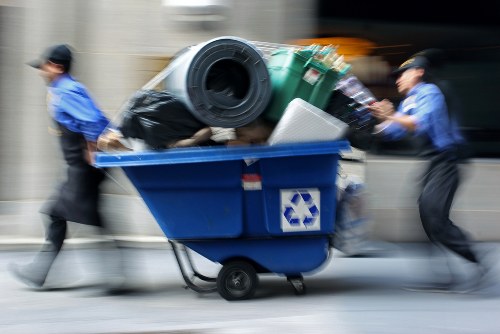 Emergency preparedness is a core element of this policy. Clear emergency procedures, evacuation routes and assembly points are established for each site where a Poplar office clearance takes place. First aid provision, incident reporting and liaison with emergency services are documented in site briefings. Where special risks exist — for example, asbestos-containing materials or large-scale solvent stocks — operations are paused and specialist advice obtained before work continues. The priority is always the welfare of people on site.
Responsibilities and Duties
Management will ensure that risk assessments and method statements are available for typical tasks and that they are reviewed regularly. Supervisors will enforce safe work practices during each rubbish removal or clearance job. Individual workers have a duty to follow instructions, wear required PPE and use lifting equipment correctly. Visitors and clients must be advised of any on-site hazards when an office clearance or rubbish collection is underway.
 Key responsibilities include maintaining equipment, keeping records of training and certifications, and ensuring that vehicles used for Poplar office clearance are roadworthy and loaded safely. The organisation will:
- Provide toolbox talks and practical training for manual handling and waste segregation;
- Ensure safe storage and transport of mixed waste and recyclable materials;
- Maintain clear communication channels between site teams and office coordinators.
Employees must wear appropriate PPE such as gloves, high-visibility clothing, protective footwear and eye protection where required. Mechanical aids such as sack trucks, trolleys and small lifting hoists are used to reduce manual handling risks during commercial clearance work. Regular inspections of equipment and PPE are carried out, and defective items are withdrawn from service immediately.
Hazard Controls and Safe Working Practices
Before any clearance work begins, a site-specific check is conducted to identify trip hazards, unstable fixtures, hidden electrical sources and obstructions. Items that may pose an environmental or health hazard — e.g., batteries, solvents, fluorescent tubes or electronic waste — are segregated for specialist disposal. A clear chain of custody for hazardous materials is maintained, and staff are trained to recognise and report potential hazardous items without attempting to remove them unless authorised.
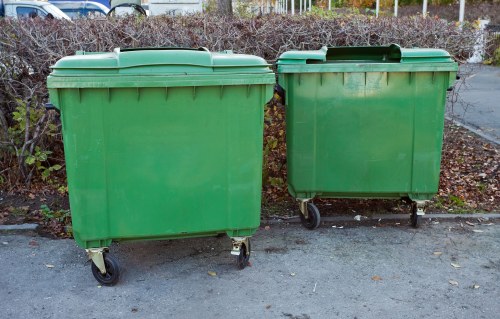 Safe loading and transport procedures are implemented: weight limits are observed, loads are secured, and vehicle sheets or doors are used to contain materials. When working at height to access storage or perform light dismantling, appropriate fall-prevention measures are applied. Work areas are kept tidy to prevent slips and falls, and adequate lighting is used for early morning or late evening operations.
 Communication tools such as radios or mobile devices are used to coordinate teams, but their use is controlled to avoid distraction during manual handling or vehicle manoeuvres. Incidents and near misses are recorded and investigated to identify root causes and to update training and procedures. Routine performance monitoring and safety audits ensure that the policy remains effective and that lessons learned are translated into improved practice.
Training is ongoing: all staff receive induction training covering the core elements of this policy, with refresher sessions scheduled periodically. Practical assessments demonstrate competence in safe lifting, segregation of recyclable and non-recyclable materials, and correct use of mechanical aids. Supervisors are trained in risk assessment and in preparing simple method statements for bespoke jobs such as complex commercial clearance projects.
Record-keeping supports safety performance: job risk assessments, equipment checks, PPE issue logs and incident reports are maintained for review. The organisation commits to continual improvement through regular policy review, informed by audit findings, worker feedback and changes in operating practice. This approach helps ensure that a Poplar office clearance or rubbish removal job is completed efficiently, responsibly and with minimal risk.
In summary, this health and safety policy establishes clear expectations for safe conduct during office clearance and rubbish removal work. By combining sound planning, adequate resources, effective training and active supervision, the organisation seeks to protect everyone involved while delivering reliable clearance services across the service area. Compliance with this policy is mandatory for all staff and partners engaged in any aspect of the clearance operation.
